Confessions of a Screen-Only Gamer: How I Lost a Boss Fight to a 40-Page Rulebook
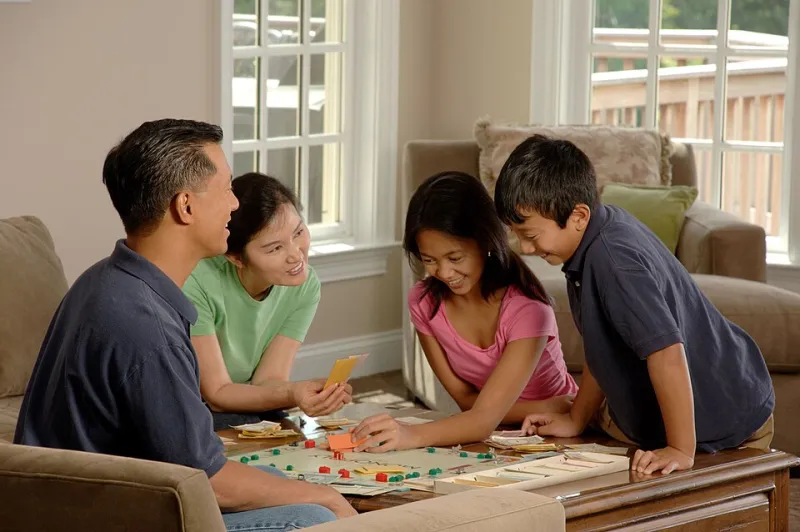
Photo: Bill Branson (Photographer), Public domain, via Wikimedia Commons
I want to be upfront about something: until last Friday, my entire social gaming life existed behind a screen. Voice chat, yes. Emotes, obviously. Actual eye contact with another gamer? I've had more meaningful interactions with loading screens.
But a coworker — a person I trust, which in retrospect was my first mistake — invited me to a weekly board game night at a local game store about fifteen minutes from my apartment. Real people. Real tables. Real dice that can, and I cannot stress this enough, roll off the table. I said yes, partly out of curiosity and partly because I've been meaning to leave the house in a way that doesn't involve a drive-thru.
What follows is my field report. I survived, technically. But I want it on the record that I did not win.
Phase One: The Tutorial Level
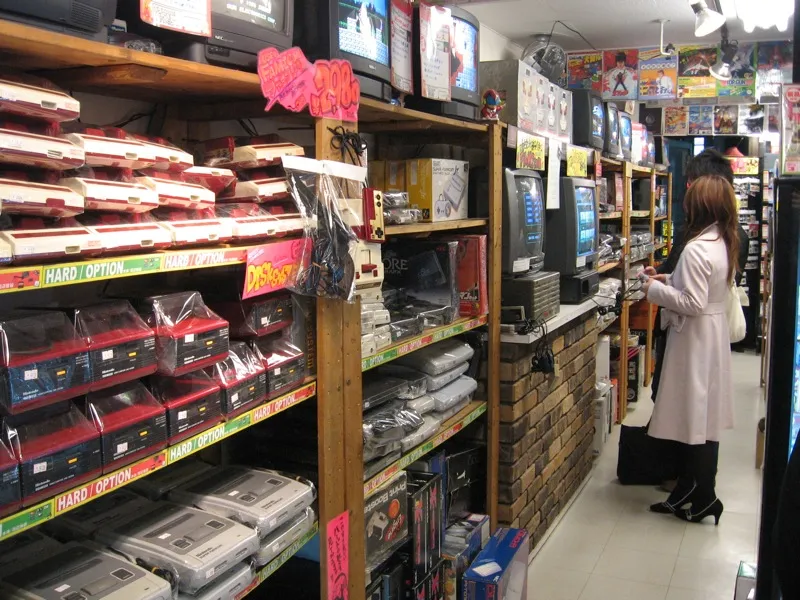
Walking into a game store for a scheduled social event, as a person whose primary social lubricant is a mute button, is an experience I'd describe as "exposure therapy with dice." The store smelled like cardboard and potential. There was a wall of games so dense it looked like the Library of Alexandria, if Alexandria had a strong opinion about deck-builders.
I was greeted warmly, handed a chair, and introduced to roughly eight people whose names I immediately forgot. Everyone was genuinely nice. That's the part nobody tells you: tabletop people are terrifyingly welcoming. There's no matchmaking algorithm. There's no mute. There's only a man named Dave offering you a pretzel and asking about your week.
I panicked and said "good," which is not an answer to "how was your week," but Dave rolled with it. Dave is the reason I made it to phase two.
Phase Two: The Rulebook Boss Fight
The game we chose had, by my estimate, a rulebook comparable in length to a novella and in density to a phone book from 1997. And here is where I met the true final boss of the entire evening: a man I'll call Gary.
Gary had read the rulebook. Gary had memorized the rulebook. Gary had, I believe, internalized the rulebook on a spiritual level. And when someone suggested that maybe, just maybe, Gary could give us "the two-minute version," Gary looked at that person the way a paladin looks at a necromancer.
"If we skip rules," Gary said, with the gravity of a man delivering a eulogy, "we won't play it right."
Reader, we did not play it right anyway. We played it for two and a half hours, during which Gary consulted the rulebook no fewer than forty times, each time with the solemnity of a courtroom attorney producing evidence. At one point he cited a specific page number from memory. I clapped. Nobody else did. I regret nothing.
Here's what surprised me, though: the argument — sorry, the rules discussion — was weirdly fun. Back home, disagreements in chat devolve into accusations about someone's mother. Here, two grown adults argued for six minutes about whether a card could be played "during" or "after" a phase, and then shook hands and split a plate of cookies. It was conflict resolution. In person. With snacks. I genuinely didn't know games could work like that.
Phase Three: The Loot (Emotional)
Did I win? Absolutely not. I came in last, largely because I spent my first three turns building what Gary called "a strategically inadvisable engine" and what I called "a vibe." But I laughed more in one evening than I had in a month of voice chat, and when the store closed, someone said "same time next week?" and I heard myself say "yeah, probably" — which, in introvert currency, is a signed blood oath.
So, for the benefit of future recruits, I present my findings: a tier list of board game night archetypes, ranked by survivability.
The Tier List
S Tier — The Patient Teacher: This person explains rules in plain English, checks if you're following, and never once sighs. If you encounter this person, protect them. They are the ecosystem's keystone species.
A Tier — The Snack Sharer: Brings a bag of good chips, places it in the center of the table, says the words "help yourself." A public servant. A hero.
B Tier — The Enthusiastic Screamer: Reacts to every dice roll like it's the Super Bowl. Exhausting, but their joy is load-bearing.
C Tier — The Phone Checker: Plays one card per turn, checks their phone between phases, and says "wait, what happened?" constantly. Harmless, but they're playing a different, sadder game.
D Tier — The Snack Monopolizer: The bag of good chips is theirs now. They hover over it like a dragon on a hoard. You must negotiate for a single pretzel.
F Tier — The Rules Lawyer (see: Gary): Technically correct at all times, spiritually exhausting at all times. I say this with love, Gary, if you're reading this. I'll be back next week. Please summarize.
See you at the table. I'll be the one losing gracefully and defending my pretzels.